
Annual Review
Dance & AI in 2025: Beyond Synthetic Imitation – The Irreplaceable Soul of Human Dance
AI video tools evolved dramatically this year. Yet dance—embodied, precise, and profoundly human—remained synthetic motion's most elusive frontier. From our curatorial perspective at Dance Artworks Gallery, we explore why authentic movement still carries an irreplaceable soul, demanding recognition for collectors, interior designers, and all who value embodied truth.
Essential Points
- 2025 saw significant advancements in AI video generation, yet credible dance synthesis remains fundamentally out of reach.
- Dance exposes AI's core limitations: the inability to replicate the phenomenology of the moving body, coherent biomechanics, and human intentionality.
- Discerning viewers instinctively detect synthetic dance through anomalies in weight transfer, anatomical consistency, and material physics.
- The dance world integrates AI as a choreographic catalyst and archival interface, never as a replacement for human interpretive artistry.
- In a market flooded with digital simulacra, provenance and the documented authenticity of human-made dance photography will command premium value.
Contents
Introduction: The Unyielding Test of Dance
We've spent 2025 watching AI video tools evolve at an astonishing pace. The outputs are visually sharper, motion smoother, and generation times significantly reduced. Yet, one domain of visual artistry has remained stubbornly resistant to credible synthesis: human dance.
The body, in its intricate complexity, carries constraints that most generative algorithms consistently fail to hold across time. Coherent anatomy, the logical flow of momentum, the subtle truth of floor contact—when any of these fracture, viewers sense it immediately. As the French phenomenologist Maurice Merleau-Ponty posited, our body is our primary means of being-in-the-world; AI, lacking a "lived body," cannot replicate this fundamental experience.
As curators specializing in dance photography and fine art for interiors, we interpret this persistent gap as a profound signal. Authentic dance imagery, captured through the lens, carries undeniable provenance, embodied precision, and optical truth. Synthetic visuals may appear impressive in static frames, but watch the body move, and the fragile credibility of the simulation often unravels.
Technology Landscape 2025: Rapid Advances, Persistent Gaps
OpenAI's expanded Sora access across 2024–2025 redefined market expectations for text-to-video workflows. Luma introduced Modify Video, specializing in restyling existing footage while preserving underlying motion. Runway continued its frequent model updates, pushing the industry toward greater controllability and prompt adherence. These tools excel in scenarios with loose motion, shallow physical interactions, and forgiving physics.
However, dance demands the inverse: strict biomechanical continuity, intricate contact dynamics, and rhythm embedded deep within muscle memory. Generative video tools struggle precisely when a body must move with the informed precision and nuanced intentionality of a trained dancer.

Silhouette Series by Cédric Brion—real dance, real physics, documented provenance. This image exemplifies authentic weight transfer and fluid anatomical logic.
Why AI Still Struggles With Dance: The Embodied Truth
Transition integrity: The Invisible Threads of Movement
Dance exists within transitions, not merely static poses. A plié is not an isolated shape, but a fluid journey from extension to compression and back. Synthetic motion often "snaps" between plausible keyframes, losing the intricate, continuous "connective tissue" that defines embodied movement. The neural pathways and proprioceptive feedback loops that guide a dancer's every micro-adjustment are currently beyond algorithmic replication.
Weight transfer and floor reaction: Gravity's Unyielding Logic
A dancer's center of mass travels with an unwavering physical logic. Knees compress under load, feet subtly grip and release the floor, and hips engage in nuanced counterbalances. AI often smooths motion into something visually appealing but biomechanically implausible—a weightless, floating quality that instantly breaks realism upon closer observation. As any dancer knows, gravity is a partner, not an obstacle to be ignored.
Contact points and partnering: The Dance of Two Bodies
Partner work profoundly amplifies every generative error. Hands must grip with precise friction logic, lifts demand coordinated weight distribution, and micro-corrections are constant. Synthetic outputs frequently omit these intricate details, resulting in interactions that feel disconnected and defy the subtle physics of human connection.
Hands, feet, and joint alignment: The Articulation of Extremities
Generative models notoriously struggle with the complex articulation of human extremities under motion. Dance demands clean lines, beautifully articulated feet, and believable joint angles. When fingers inexplicably drift, ankles lose definition mid-gesture, or knees bend unnaturally, the credibility of the entire movement collapses. These seemingly minor details are critical to the "grammar" of dance.
Rhythm, breath, and micro-fatigue: The Human Imprint
Real performance carries tiny, organic asymmetries. Breath timing subtly alters torso shape, and the cumulative effect of fatigue shifts movement quality across a phrase. Synthetic motion, in its pursuit of uniform "perfection," paradoxically reads as uncanny, lacking the nuanced imperfections that are deeply human. The embodied rhythm, the inhalation before a leap, the tremor of sustained effort—these are the hallmarks of life itself.
How You Sense Synthetic Dance Imagery: Signals of the Simulated
Optical truth versus rendered gloss: The Authenticity of Imperfection
Authentic photography inherently captures lens behavior, subtle sensor noise, and the nuanced imperfections of natural light and skin texture. Synthetic visuals, by contrast, often over-polish these elements, producing images that appear unnaturally clean and glossy—a "rendered" quality that conspicuously signals its non-photographic origin.
Body truth signals: The Unspoken Anatomical Dialogue
Observe the continuous relationship between hips and ribcage across multiple frames. Note the precise placement of shoulders relative to the neck. Examine the subtle curves of the spine during rotation. In synthetic output, these anatomical relationships often drift subtly but perceptibly, disrupting the body's internal coherence and revealing its algorithmic construction.
Fabric and hair behavior: The Physics of Drape and Flow
Materials like tulle, chiffon, flowing hair, or even the gleam of sweat, are instant betrayers of artificial motion. Real fabric possesses inertia, drape, and subtle delays. Real hair has weight, friction, and a tendency to tangle. Synthetic visuals frequently "stylize away" these complex physics, presenting materials that move too cleanly, without natural resistance, or hair that flows too perfectly.
Background versus body coherence: The Dancer as Focal Point
Many video-to-video tools prioritize background stability, allowing the foregrounded body to subtly warp or wobble. Dance photography, however, demands the inverse: the dancer's body must remain utterly credible and stable, even if the environment is secondary. Viewers are intrinsically drawn to, and primarily track, the authenticity of the human form in motion.
The AI Experiment: Current Dance Synthesis Examples
To illustrate the limitations discussed, observe these AI-generated dance attempts. Note the inconsistencies in weight transfer, anatomical drift, and the absence of embodied intentionality that defines authentic dance.

Meta AI: Metamorphosis Loop Study
AI-generated looped movement exploring organic transformations and wing-like layering. Demonstrates generative potential for abstract motion concepts, though lacking embodied anatomical logic.
View on Meta AI →Runway Gen-3: Motion Synthesis
AI-generated dance sequence revealing persistent challenges with weight transfer, anatomical coherence, and the subtle physics of embodied movement.
Reference Library: Embodied Authenticity
Four canonical works demonstrating the qualities synthetic motion cannot yet replicate. Compare these with the AI examples above to understand the embodied truth gap.
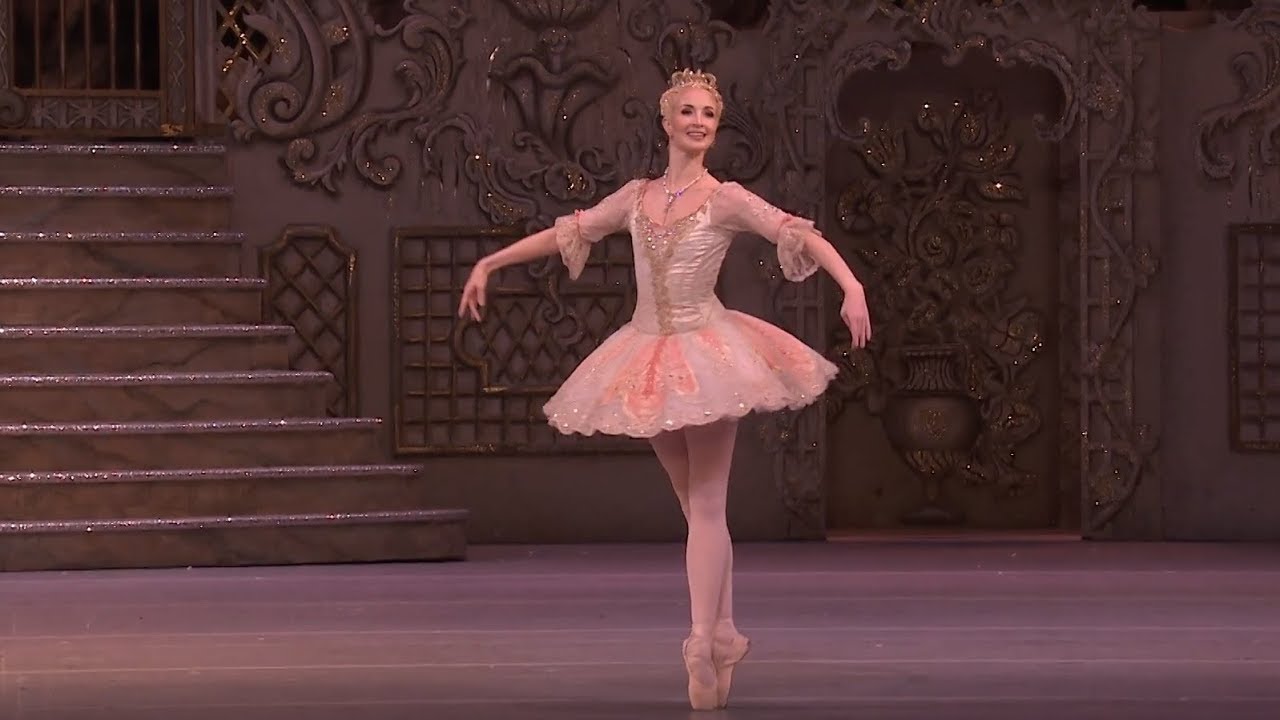
Classical technique with authentic weight transfer, breath integration, and decades of embodied training visible in every gesture.
Watch on YouTube →The Royal Ballet
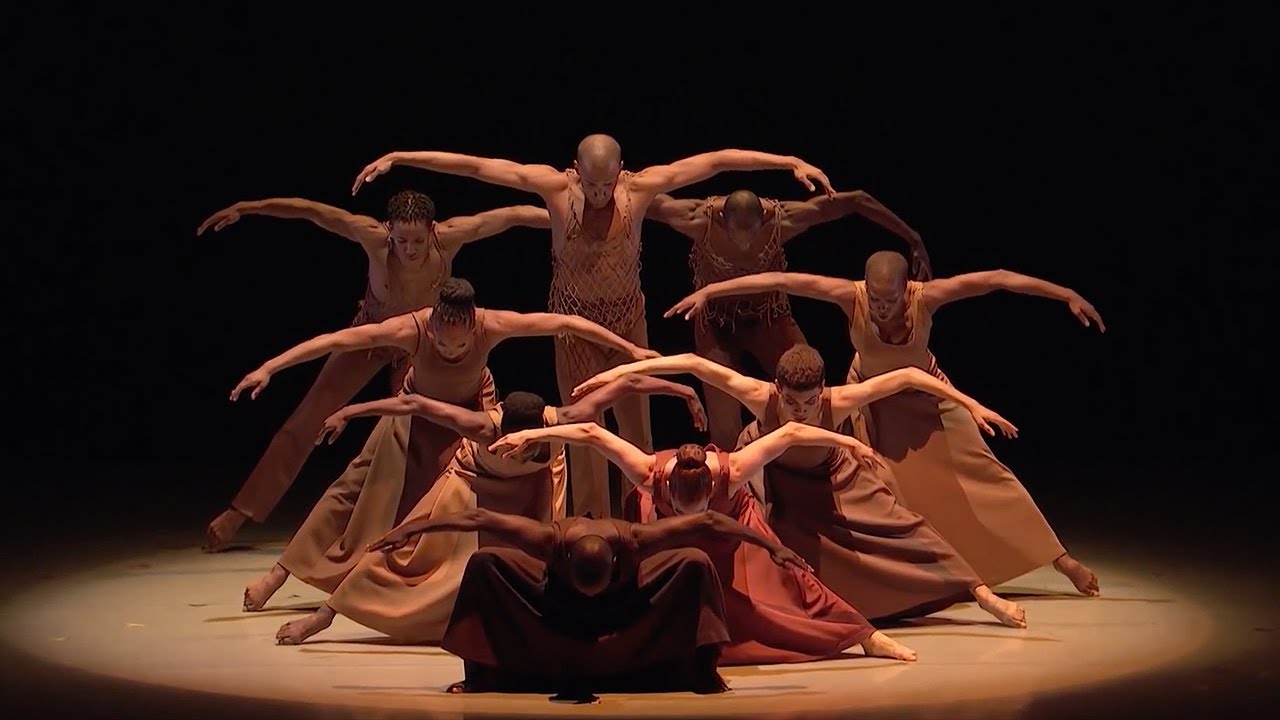
Contemporary dance with embodied emotion, cultural memory, and irreplaceable human vulnerability woven through movement.
Watch on YouTube →Alvin Ailey American Dance Theater

AI as creative catalyst, trained on McGregor's archive—but human dancers bring interpretation, intention, meaning to generated suggestions.
Watch on YouTube →Wayne McGregor's AISOMA

Embodied expression and existential vulnerability that resist algorithmic reproduction—movement as lived emotional experience.
Watch on YouTube →Pina Bausch's "Café Müller"
Dance World Signals From 2025: AI as Catalyst, Not Creator
The professional dance community engaged with artificial intelligence thoughtfully this year, consistently positioning it as a conceptual tool and a fascinating partner for exploration, rather than a substitute for human performers or choreographers.
AI as Choreographic Archive Interface: The Case of Wayne McGregor
Wayne McGregor, a pivotal figure at the intersection of dance and technology, provides a compelling illustration. His AISOMA project, developed with Google Arts & Culture Lab and featured in Somerset House's "Infinite Bodies" exhibition, utilized machine learning to generate movement suggestions derived from his company's extensive repertoire. McGregor describes these AI-generated phrases as "occasional creative prompts"—unexpected combinations that invariably require extensive human refinement, interpretation, and embodied translation to become danceable, let alone meaningful. As he articulated in recent interviews regarding projects like "Autobiography" (where his personal genomic data informed choreography) and "+/- Human" (exploring human-robot interaction), "The AI can propose shapes, but it cannot propose reasons." The essence remains the human body: dancers embody data or interact with robots, bringing emotion, variability, and an irreplicable human quality to the movement.
AI as Performance Concept: Framing the Narrative
Holland Festival's "Cyber Subin" and other visionary productions integrated AI as a potent narrative element and a conceptual framework within the performance ecosystem. Here, technology became the subject matter, prompting audiences to reflect on its implications, rather than merely functioning as an execution method for pre-programmed movement. This approach respects the unique contribution of human artistry while engaging with contemporary themes.
Institutional Framing of Embodiment: Dialogue at Jacob's Pillow
Prestigious institutions like Jacob's Pillow deepened public conversation through initiatives such as "Dancing the Algorithm." These programs framed technology not as a threat, but as a catalyst for critical inquiry into embodiment, authorship, and the creative process in dance. The dance field, with its inherent focus on the corporeal, consistently treats "the body" as its foundational core, an element that is non-negotiable and fundamentally human.
Where This Heads in 2026: A Bifurcating Market
Better Motion Preservation, Still Weak Credibility: The Nuance Gap
Video-to-video workflows, such as Luma's Modify Video, will undoubtedly continue to improve in their ability to preserve input performance while altering stylistic context. These tools will prove invaluable for rapid concept development, editorial experiments, and mood board creation. However, credible dance synthesis demands more than mere motion preservation—it requires an innate understanding of biomechanical continuity, the truth of physical contact, and the nuanced intentionality that current models cannot yet sustain. The leap from motion capture to embodied truth remains vast.
A Split Market for Dance Visuals: Authenticity as Currency
We anticipate a widening bifurcation in the market for dance visuals. Synthetic dance imagery will proliferate across ideation contexts, social media feeds, and highly stylized campaigns. Conversely, authentic dance photography—captured, not generated—will experience a significant surge in value for discerning collectors, interior designers, and cultural institutions that prioritize verifiable provenance and the profound resonance of embodied authenticity.
What Discerning Buyers Will Demand: Transparency and Depth
- Clear Provenance Documentation: Detailed photographer credits, explicit production details, and the specific performance context.
- Photographer Reputation: A track record of artistic excellence and exhibition history.
- Transparent Edition Structure: Clear information on edition size, numbering, and Certificates of Authenticity.
- Archival Standards: Documented archival processes and professional framing guidance published upfront.
Why This Matters for Collectors and Interiors
Scarcity shifts from "beautiful image" to "credible embodied image"
As AI-generated visuals flood digital spaces, scarcity no longer resides in "beautiful dance image"—algorithms produce those efficiently. Scarcity now centers on credible embodied imagery with traceable authorship, documented production, and optical truth.
Dance photography as documented event
A photograph of dance captures a performance moment that never repeats. The image becomes evidence of a unique embodied event, not a generated variation on training data. This temporal specificity carries cultural and financial value.
The human-made premium in interiors
For residential and hospitality interiors, provenance matters. Clients increasingly ask: Who made this? Under what conditions? Can I verify its origins? Human-made dance photography with clear documentation answers these questions. Synthetic visuals cannot, by definition.
Curatorial Actions: Ensuring Authenticity
At Dance Artworks Gallery, we are continuously refining how we present and document our collection in direct response to this evolving landscape, ensuring utmost integrity and value for our patrons.
Credibility Signals We Rigorously Assess
- Does anatomical consistency hold flawlessly across a sequence or series of images?
- Do hands and feet appear physically plausible and articulated under dynamic load and motion?
- Do fabric and hair meticulously obey the laws of inertia, friction, and gravity?
- Does the image carry explicit photographer attribution, verifiable production methods, and clear edition logic?
- Can the work's creation be definitively traced to a specific photographer, a documented performance, or a particular studio session?
What We Publish on Product Pages to Guarantee Transparency
- A comprehensive photographer biography and contextual career overview.
- Detailed production specifications: camera, lens, lighting approach, and specific capture details.
- A transparent edition structure, clear numbering, and the process for obtaining a Certificate of Authenticity.
- Expert guidance on archival materials and professional framing recommendations.
- Specific performance or studio session context, when available, enriching the artwork's narrative.
Explore Our Curated Collection of Authentic Human-Made Dance Photography


